Blog

  • The Truman Show

    Jaden Gable

    The cultural resource:

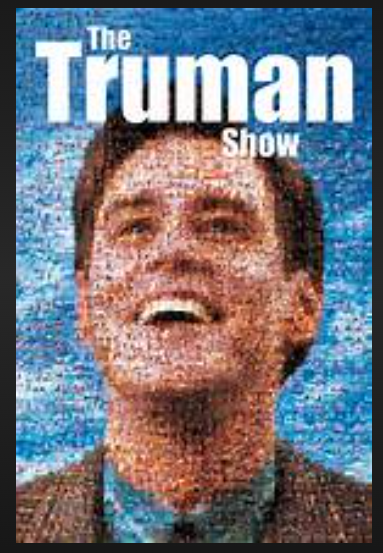
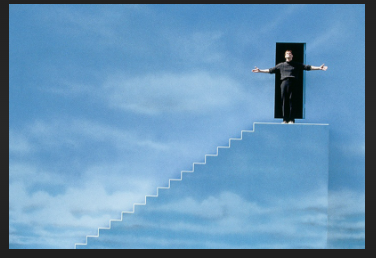
    One cultural resource that represents an idea that is an imagined alternative to existing cultural and social conditions is the movie The Truman Show. The film was released in 1998, directed by Peter weir and starred Jim Carrey. This film came out before the advent of social media, influencers, and constant livestreaming were a part of everyday life. This film depicts a world where one man’s entire life, literally from birth, is broadcast as entertainment worldwide, unbeknownst to him. The show takes place in a fake idyllic town constructed within a massive dome, and the main character, Truman Burbank (Jim Carrey), is unaware that his whole world is a constructed television set. Every person he has ever known, his friends, family, coworkers, are all paid actors. Every event in his life is carefully planned and scripted, and Truman’s most intimate and private moments are viewed by millions of people as they watch his life unfold in real time. The movie reimagines the relationship between privacy, capitalism, media, and free will, depicting an unsettlingly plausible alternative to current cultural conditions. The Truman Show imagines a society in which a person’s entire life is consumed for entertainment without permission, profit is prioritized over privacy, and one’s personal experiences are monetized. This reflects an extreme version of existing economic conditions rooted in consumerism and capitalism.

    Would this alternative require technological or systemic change?:

    This reimagined alternative is something that would require technological and systemic change. In terms of technology, the film required advanced surveillance and hidden camera systems used to track Truman through every waking minute. Cameras would need to be hidden everywhere without the person noticing. The ability to create a controlled environment that looks realistic and can simulate weather and mimic geography would also be important to make things convincing. It also requires systemic change since there are obviously significant ethical issues. Society would have to accept the fact that an individual’s rights and autonomy would be stripped away for entertainment and monetary reasons. A system where someone’s personal rights are taken away for a TV show would mean that the TV network would hold immense power, and the political system would allow it to have that power.

    Current conditions:

    The Truman Show reflects many elements of current conditions. Although none of us are living in a massive dome (or are we?), we are under constant surveillance. Our smartphones and other devices are tracking us and collecting data, and data collection has become normalized in the age of surveillance capitalism. The media is constantly trying to shape how we perceive and believe things, and many people find themselves in informational “domes” when algorithms continuously present information to us that aligns with our existing beliefs and viewpoints. People are also sharing much of their personal lives on social media, which is often highly performative, and reality TV has become increasingly popular. Overall the Truman Show is a deeply relevant warning regarding our contemporary society, where privacy and authenticity are becoming less common. The film highlights how the system is designed to control perception, but also the fact that we can reclaim our autonomy, as Truman finally breaks free from the constricted world.
  • A Stereotype I’ve seen in media

    One stereotype I have seen play out in real life as well as in media is that male athletes are Dumb, aggressive, and academically challenged. This stereotype is especially prevalent with football and basketball players, and as some who follows and has participated in these sports, I have noticed this stereotype often.

    The media construction

    This portrayal of male athletes is common across film, TV, and sports commentary. Male athletes are deemed physically talented but limited intellectually and academically. They are shown as aggressive, hyper-masculine, and emotionally unintelligent. I believe that this construction is partially accurate but mostly inaccurate. Some athletes take their sport more seriously than their academics due to time constraints or scholarships, and competitive sports at a high level do require physical toughness and emotional restraint. But this construction becomes inaccurate when it is overgeneralized. I have personally known athletes who maintain strong GPAs, have academic success, and balance personal life while excelling at their sport. Lebron James is a well-known example of an athlete who defies the notion that athletes are not intellectual, as he has advocated for education and established a foundation to support educational opportunities for children.

    Missing perspectives and context

    Perspectives that are often highlighted include athletes with mental health struggles, athletes with scholarships, and the diverse backgrounds of athletes that extend beyond sport. Context is missing, including the pressure of being an athlete and the media scrutiny that can come with it. Black athletes are often portrayed differently from white athletes, and there are implicit racial biases.

    Examples

    Friday Night Lights:

    In this show High school football players are often pressured to perform with toughness and be emotionally restrained. It perpetuates certain norms, like football being tied to masculinity, male identity, and social status, and academic performance is secondary to athletic success. A more consistent portrayal of male athletes as being intellectual and emotionally expressive would challenge the norm. Many stereotypes are prevalent in the show. One is that black individuals are only good in college for sports, not academics, and the only chance for some of the characters to go to college is through football.

    Varsity Blues:

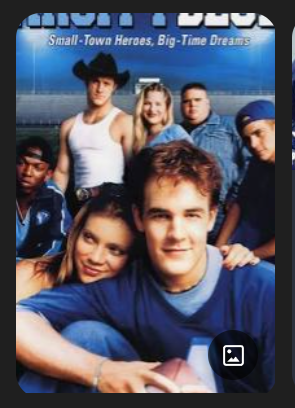
    Similar to Friday Night Lights, Varsity Blues reinforces the dumb jock hyper-masculine football player. Football is seen as the primary focus for these players, and winning football games is valued exponentially more than education. Pain is ignored, emotions are suppressed, and vulnerability is seen as weakness. Coaches force players to play through injury, and authority is not questioned. Gender stereotypes are also perpetuated, with males being framed as dominant and females being supportive and sexualized, and relationships are based on popularity and football status. Both of these examples reflect some cultural realities, but lack perspectives and context.

    Could this construction be harmful:

    This construction could be harmful since it lacks the perspective of individual male athletes and reinforces common stereotypes about masculinity. It also reinforces racial stereotypes and pressures athletes not to take academics seriously. Some who might benefit from this construction could be media that perpetuates common tropes for headlines, and Institutions that make money from the performance of athletes, like the NCAA. Overall, this media construction, while it has some truth, lacks diverse perspectives and individual athletes’ experiences. We need to question what perspectives and context are missing to understand how the media perpetuates stereotypes.

  • Origins of the Moon Landing conspiracy or controversy

    Background

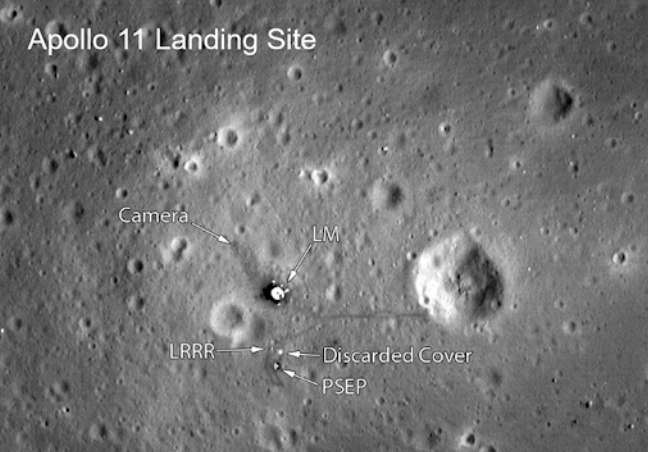
    NASA’s Apollo 11 mission successfully landed the first humans on the lunar surface on July 20, 1969, accomplishing a goal announced by President John F Kennedy in 1961. This was a national goal set forth to demonstrate technological superiority over the Soviet Union in the midst of a cold war. The Crew consisted of Neil Armstrong, Buzz Aldrin, and Michael Collins. Aldrin and Armstrong landed the Eagle Module in the Sea of Tranquility with less than 20 seconds of fuel remaining. This historic event was a defining achievement in the 20th-century, and it united the world, with about 650 million people watching the event live as Armstrong took his first step on the surface. However, in the 50-plus years following this event, conspiracy theories have remained persistent, and many claim it was all one big hoax

    Origin of the conspiracy

    Some believe that the moon landing was faked to convince the world that the U.S. had won the “space race” against the Soviet Union. This conspiracy largely originated with Bill Kaysing’s 1976 book We Never Went To The Moon – America’s Thirty Billion Dollar Swindle, which was published during a time of increasing mistrust of the government in the post-Vietnam, Watergate era. But there are many interesting claims and “evidence” set forth, with the internet breathing new life into the theory. Some of the most often-touted questions are, “Why did the U.S flag flutter as though there was wind?” and “Why are there no stars in the background of Apollo images?” These, along with many other intriguing claims, have been proposed, but upon closer inspection, these claims fail scientifically, and there is lots of evidence that confirms the landing did occur. There are countless images, videos, lunar samples, and scientific data to prove it. In addition to the physical marks left on the Moon’s surface by the expedition.

    Persuasion tactics used

    There were many persuasion tactics used to spread this theory, but there were also propaganda techniques used by President Kennedy to persuade Americans to support the moon landing mission. In his famous 1962 speech, JFK used pathos by appealing to people’s sense of pride and patriotism. He used his authority and credibility to employ ethos, and he used logos by establishing a clear, challenging goal that he claimed would benefit the country, similar to westward expansion. In terms of the tactics used to spread the fake moon landing theory, the biggest ones were the appeal to distrust of government, false experts, and the big lie technique. The Vietnam War and Watergate damaged trust in U.S. institutions, which made it easier for people to believe the government could lie about the moon landing. Bill Kaysing presented himself as an engineer who worked closely on the Apollo 11 project to establish credibility, but in reality, he had no formal background in space engineering. And the Big lie technique was used to establish the idea that the lie is so massive that people assume it must be true.

    Is the issue resolved?

    The majority of the general public has never accepted this theory for good reason. There is simply no credible evidence that supports the fake moon landing conspiracy. There were more than 400,000 people who worked on the Apollo project for nearly ten years. A hoax requiring the involvement of this many people would be impossible to keep a secret. A recent poll found that 71% of people disagree with the hoax theory, and 17% are unsure.

  • 24-hour media diary

    This post is focused on the information I provided while engaging with different media on January 30 2026.

    8:00 a.m. – wake up and check phone

    I have my alarm set on my phone for 8:00 a.m., and after turning that off, I take a look at my messages and my email. As I do this, I am providing my device’s ID, and my device is also likely keeping track of the exact time that I open up my phone and how long I interact with each app. I then check the weather app, which means my device has access to my exact location.

    9:00 a.m. – open my laptop and do some work

    I unlock my laptop with facial recognition, and I assume that data is being collected from my face and possibly sold to be used for nefarious activities, as Shoshana Zuboff, author of “The Age of Surveillance Capitalism,” talks about in this documentary. I check my email again and search some things on Google for my other classes, and Google obliviously monitors my searches and collects data from that. Professor Zuboff apparently does not use Google at all, so maybe I’ll do the same.

    10:45 a.m. – messages

    I checked my text messages and texted with my friend for a bit. I have a Google phone. and I update my privacy and security settings often. But data such as timestamps, frequency of communications, and my overall messaging behavior is collected, but at least I’m told the content is encrypted.

    11:32 a.m. – scrolling on social media

    Upon opening up TikTok and starting to scroll through my “for you page,” TikTok tracks things like my watch time, liked videos, replays, and other viewing habits to improve its algorithm. It also collects biometric data and other info, including my name, age, email, and phone number, and is synced with my contacts, although I don’t recall being asked about that.

    12:24 p.m. – YouTube

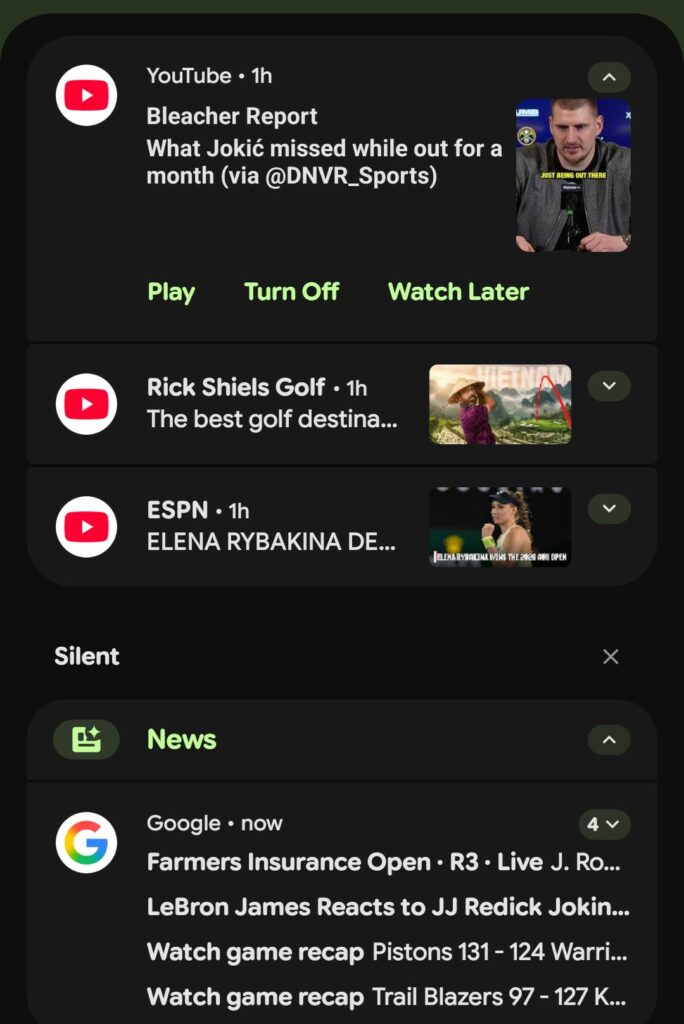
    YouTube is constantly sending me notifications about new videos it recommends for me. So, I pick one of them and then look for some other videos or shorts to watch. YouTube collects a lot of the same info as TikTok, but YouTube has a lot more ads, which it tailors to me based on what it thinks my interests are.

    1:32 p.m. – Shopping

    I went on the TikTok shop to see if there was anything I wanted to buy since there are some pretty good deals. There also always seems to be “flash sales” on the things I have bought in the past. Today, I was browsing the shop and came across a shower filter. When I went back to scrolling, I immediately saw a video of someone selling the same product, claiming it’s on sale right now.

    2:36 p.m. – music streaming

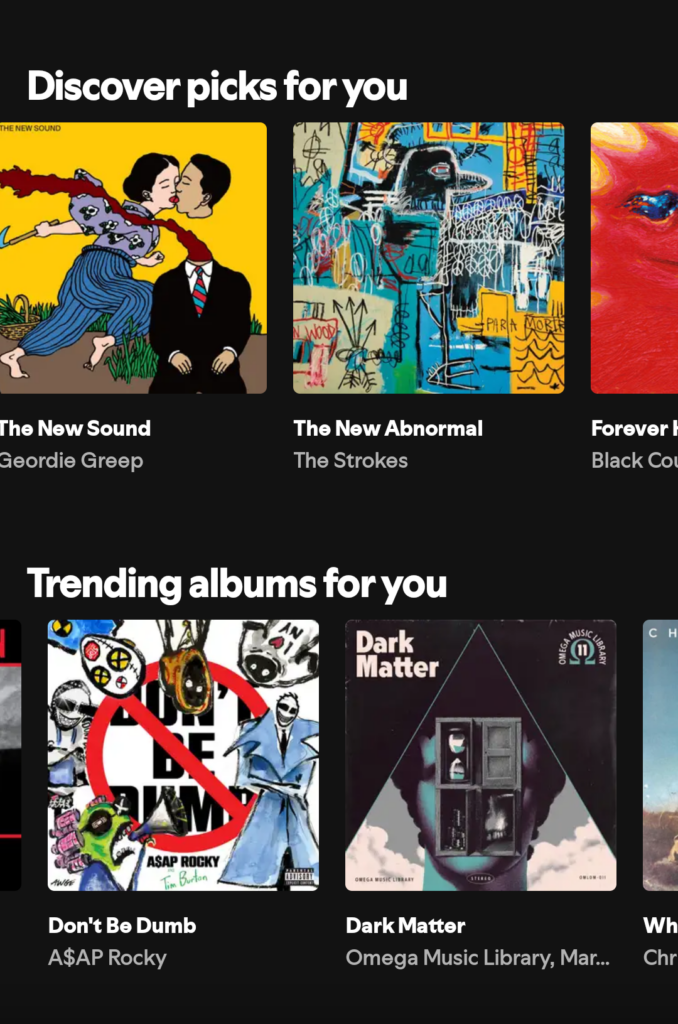
    I went to the gym and listened to some music while I was there. I use Spodify, which tracks things like my listening history, liked songs, skipped songs, and listening time to give me music recommendations. Google probably also keeps track of when I go to the gym and probably knows my entire routine by now.

    6:54 p.m. – scrolling

    I scrolled some more and jumped between TikTok, Instagram, and YouTube.

    8:36 p.m. – Netfilx

    I watched a show on Netflix, which keeps track of my activity similar to Spotify, and makes recommendations based on what I watch.

    Reflection:

    Every media I interacted with had today collected some sort personal, behavioral, or even biometric data. The data collected shapes what content, ads, and information that I receive from media cites. I think I interacted with less media than most people do, and I think the less media I interact with the better. When I do interact with media moving forward, I will take steps to improve my security and privacy such as getting a VPN, and simply not giving away info unless I need to. But there is no way to achieve complete privacy in the digital world, which is why I aim to consume as little media as possible.

  • Jaden Gable

    My media use

    This is my 24-hour media diary for Friday, January 16, 2026, documenting every media source I used for this day.

    8:30 a.m.. –

    When I first wake up, I make it a point to try not to be on my phone, and definitely not scroll through social media. So, I just quickly checked my messages and took a peek at the weather, and I was delighted when I saw the 70-degree and sunny forecast.

    8:45 a.m.

    After chugging some water and going outside to do some stretches, I like to read a few pages of a book to start the day off quietly and calmly and with positivity. Right now, I am reading A New Earth by Eckhart Tolle, a profound spiritual teacher. This is the most important and enlightening book I have ever read, and I recommend everyone to read this book.

    9:30a.m.

    I went on my laptop and checked my email. Then I went on canvas and started working on some of my assignments for other classes.

    10:30a.m.

    After not being on my phone for the first 2 hours of the day, I gave in and scrolled through YouTube and watched a few shorts. I then checked my google feed to see who won some of the games last night in the NBA.

    10:45a.m.

    I scrolled on my for you page a little on TikTok. I also scrolled a little on Instagram reels. But I stopped my self from going to far down the rabbit hole.

    11:05a.m.

    In went back to YouTube and watched some first take on ESPNs you tube channel.

    11:15a.m.

    checked my email again and worked on some assignments.

    12:05p.m..

    I used google maps to go to a new gym that I wanted to try since it has a cold plunge. I’ve been wanting to try cold therapy for a while, and it was absolutely freezing but I felt great after.

    12:20p.m.

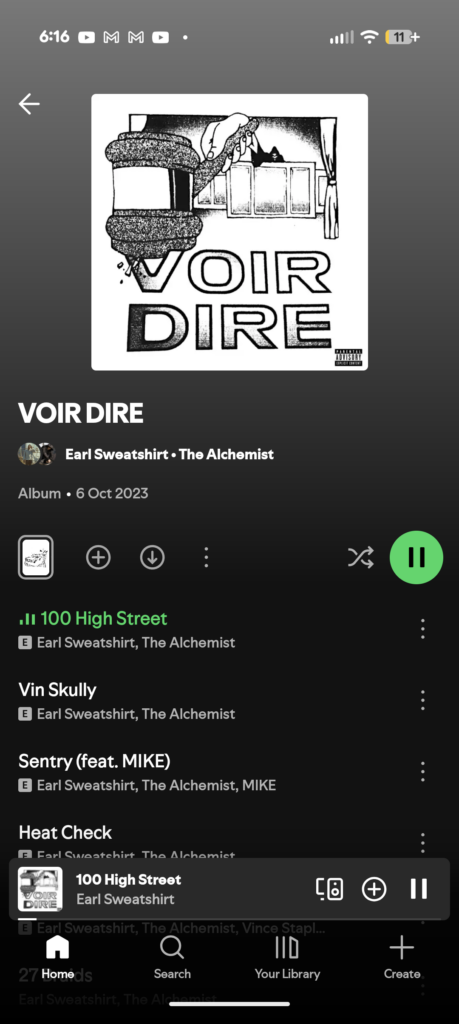
    As I was working out I hoped on Spotify played the album VOIR DIRE, by Earl Sweatshirt and the Alchemist, which has been one of my favorite records for the past few years. I prefer to listen to full albums rather than cherry picking songs with playlists.

    2:30p.m.

    A little after I got back from the gym, I watched this documentary called Darkon on YouTube, which is about this medieval fantasy roll playing club. I had to watch this for my sports and culture class, and it was pretty interesting to say the least.

    4:15p.m.

    I hoped back on canvas and started working on this blog post assignment.

    5:20p.m.

    Scrolled on Instagram a little.

    6:37p.m.

    Tuned in to the Bulls Nets game since it just happed to be on, and I watched that for a while.

    8:20p.m.

    I watched an episode of Landman on paramount plus. It a pretty dramatic show about the oil industry but it is also super funny.

    9:24p.m.

    I scrolled on my phone a little and then read my book for about 20 minutes.

    Actively keeping track of every time I used media helped me be much more aware of my media usage. I think I definitely spend too much time scrolling, although I have cut down on it by more than half over the past year. I also think I should spend more time reading throughout the day, but overall I think I have healthy media habits, and apparently I only had 1 hour and 47 minutes of screen time on my phone that day, which is very low for me.

  • Hello world!

    Welcome to WordPress. This is your first post. Edit or delete it, then start writing!